Prostate Cancer: Meet Mike
Proton Therapy: Precision Treatment for Prostate Cancer
Mike Cranston, age 65, has long been dedicated to maintaining his health. The retired letter carrier gets regular exercise by working at a local golf course, eats a plant-based diet, and goes for annual screenings for prostate cancer, a disease that runs in his family. In late 2024, when Mike learned that he had prostate cancer, he was determined to surmount this challenge by learning about his treatment options and choosing proton therapy. At the New York Proton Center, Mike received lifesaving proton therapy that effectively treated his cancer while avoiding harming nearby vital organs. Today, Mike is cancer free and is back working and playing on the golf course.
“My brother, father, and grandfather all had prostate cancer, so I began going for regular prostate cancer screenings at age 40 because I thought if I began screening early, I would catch it early,” says Mike, who lives with his wife in Stratford, Connecticut. “Thankfully, I caught it early.”
Rising PSA Leads to a Not Unexpected Diagnosis
Prostate cancer screenings involve a blood test that measures the level of prostate specific antigen (PSA) in the blood. A normal PSA level is less than 4.0 ng/mL, and higher levels can indicate the presence of cancer.
“My PSA number was 4.0 for several years, so when it started to rise, I wasn’t surprised,” says Mike. “The number went up to 4.62, then down a little, and then it went up a full point to 5.1. We rechecked it again a couple months later, and then my urologist suggested I get a biopsy, and that’s when he found the cancer.”
Mike’s biopsy detected cancer in three out of 10 samples. The Gleason score, which helps predict growth and spread, was 3+4, which means the cancer was in the favorable intermediate risk category.
“My urologist said this isn’t the worst news and that my cancer is contained, which means it hadn’t spread outside of the prostate,” says Mike. “He explained two treatment options: surgery or radiation. I had heard from friends that there are some side effects from the surgery such as urinary urgency and leakage, which I did not want, so I decided to look into radiation.”
Embracing the Precision of Proton Therapy
Through his research, Mike discovered proton therapy, a form of radiation therapy that uses protons instead of conventional X-rays to target and destroy cancer cells. Protons have unique physical properties that allow them to deposit most of their energy precisely at the tumor site, sparing healthy tissues surrounding the tumor. This precision is especially crucial in prostate cancer treatment due to the prostate gland’s proximity to vital organs such as the bladder, bowel, and rectum.
“Proton therapy made so much more sense to me than traditional radiation treatment because the protons are deposited right in the prostate instead of affecting everything around it,” says Mike. “I researched proton centers near where I live and found the New York Proton Center (NYPC), which is just 60 miles away from my home.”
At the NYPC, Mike met with Dr. Irini Yacoub, a radiation oncologist who specializes in the treatment of prostate cancer and other types of cancers. Dr. Yacoub told Mike he was an excellent candidate for an innovative form of proton therapy called five-fraction SBRT (stereotactic body radiation therapy) treatment, which delivers a higher dose of proton therapy per treatment session over just five days, with sessions occurring every other day.
This accelerated treatment schedule significantly reduces the overall treatment duration compared to standard five-plus-week courses of radiation therapy. The convenience of the accelerated treatment schedule enables patients to complete therapy more efficiently, reducing their time commitment without compromising outcomes.
“Five-fraction SBRT proton therapy is appropriate for patients like Mike with early stage, localized prostate tumors,” explains Dr. Yacoub. “It was an excellent treatment option for Mike because it minimizes the radiation dose to the rectum, bladder, and penile bulb, which helps to ensure good quality of life after treatment.”


A Smooth and Supportive Treatment Experience
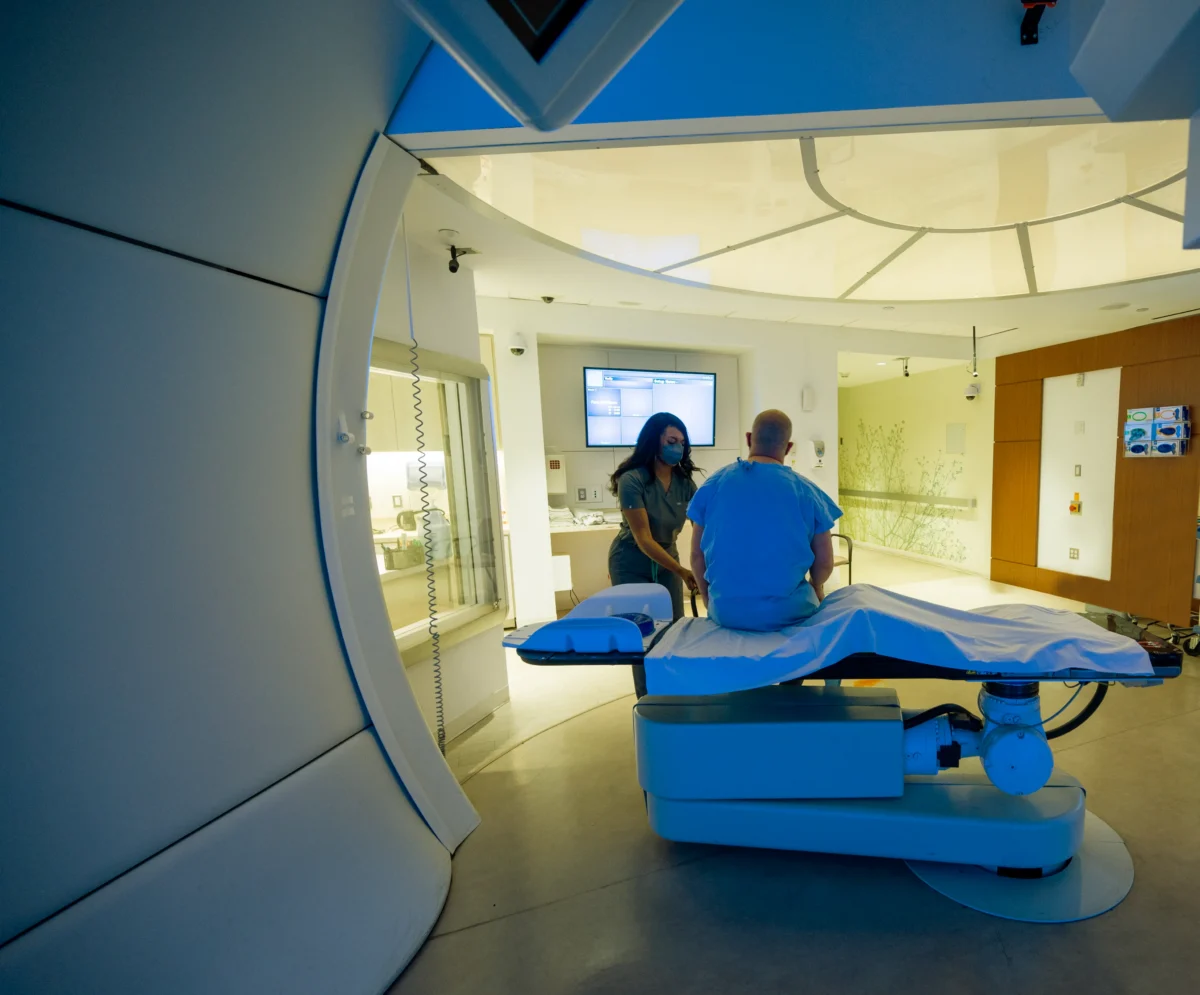
In April 2025, Mike began proton therapy at the NYPC. With his wife Sue by his side, he commuted by train into the city and received five treatments over two weeks.
“I had a wonderful experience at the NYPC,” says Mike. “Everybody was so helpful. Dr. Yacoub always answered any questions I had, and the staff was always very willing to help.” Sue, who has retired from a healthcare career, was equally impressed. “I would make the same decision again,” says Mike.
“One really nice feature of the NYPC is they play music during the therapy sessions, which is really helpful because it helped take my mind off of the treatment,” adds Mike. “I always requested music that put me in a better frame of mind.”
Mike had few side effects from the proton therapy. “I only experienced urinary urgency, which was worse immediately after the proton therapy. It has since calmed down as Dr. Yacoub said it would and is now back to where it was before I had prostate cancer.”
Beyond Proton Therapy Expertise — A Whole Patient Approach
“I had a wonderful experience at the NYPC. Everybody was so helpful.”
Looking Toward the Future
Now, one year after treatment, Mike is feeling good and is looking forward to playing golf and spending time with his wife, three children, and two grandchildren.
“My advice to men who are diagnosed with prostate cancer is to become knowledgeable about your disease, research all of the available treatment options, and talk to your doctor,” says Mike.
As a result of his experience at the NYPC, Mike plans to volunteer as a peer mentor through NYPC’s Patient Alumni Network. “I look forward to becoming a peer mentor because it gives me the opportunity to help others diagnosed with cancer,” he says. “Going into something like cancer, you’re scared. But it’s okay to be scared. Scared is good because it means you’re alive.”

Prostate Cancer Treated at New York Proton Center
Proton therapy delivers precise, targeted treatment for prostate cancer while sparing the surrounding bladder, bowel, and rectum.